Selecting the Right Sports Wheelchair for Different Sports
For individuals who rely on wheelchairs and are passionate about sports, the right sports wheelchair is more than just a means of participation—it is key to ensuring safety and enhancing performance. Unlike daily-use wheelchairs, sports wheelchairs are specially designed with optimized structure, materials, and performance tailored to specific athletic scenarios. Different sports vary significantly in their demands, so choosing a wheelchair suited to the sport type is essential. Below is a detailed introduction to common sports and their corresponding sports wheelchairs.
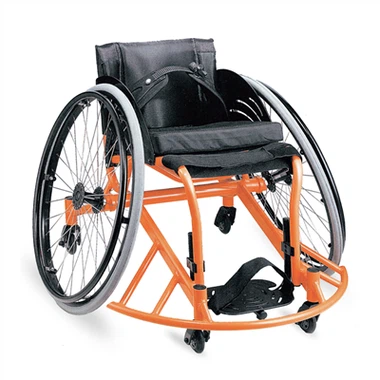 1. Wheelchair Basketball
Wheelchair basketball is a fast-paced, high-intensity team sport that places extreme demands on the stability, maneuverability, and durability of the wheelchair. Basketball wheelchairs are designed to meet these needs with the following key features:
Ⅰ.Frame Structure: Made from high-strength aluminum alloy or carbon fiber, the frame is both robust and lightweight. Designed with a low center of gravity, the chair enhances stability during sharp turns, sudden stops, and collisions, minimizing the risk of tipping. Wheelbase and track width are precisely calculated to balance agility and stability, allowing athletes to navigate the court with ease.
Ⅱ.Wheel Configuration: Smaller front wheels (typically 10–12 inches) with solid rubber tires enable quick turns and precise handling. Larger rear wheels (24–26 inches) feature wide rims and deep-tread, wear-resistant tires for strong traction and propulsion, supporting rapid acceleration and sudden stops. Rear wheels often have higher spoke counts to withstand intense gameplay.
Ⅲ.Seat Design: The seat is usually a hard-shell design made from carbon fiber or lightweight plastic, contouring to the athlete’s body for optimal support and comfort. A lower seat height further reduces the center of gravity, while adjustable backrest angles help maintain an ideal playing posture.
Ⅳ.Additional Features: Equipped with sturdy anti-tip bars to protect the athlete and chair from collisions. Armrests and footplates are streamlined and lightweight to minimize unnecessary weight without hindering movement.
Basketball wheelchairs are used in official competitions, training, and recreational play. Selection should be customized based on the athlete’s body dimensions, skill level, and personal preferences to ensure optimal fit and performance.
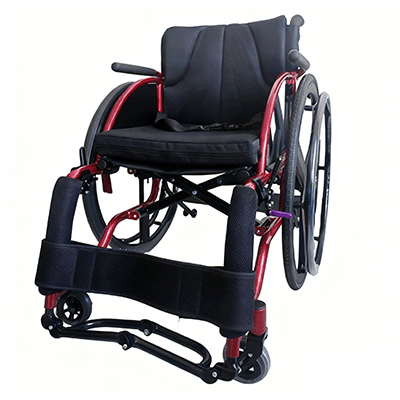 2. Wheelchair Tennis
Wheelchair tennis is a skill-focused sport that demands exceptional mobility, turning agility, and precise control, enabling athletes to reach the ball quickly and execute shots effectively. Key features of tennis wheelchairs include:
Ⅰ.Frame Design: Constructed from lightweight, high-strength materials like carbon fiber or titanium, the frame is compact and agile for rapid movement and directional changes. The geometry is optimized for a balance of flexibility and stability, ensuring balance during wide-reaching shots.
Ⅱ.Wheel System: Front wheels (8–10 inches) are often omni-directional, allowing 360° rotation for quick response to ball placement. Rear wheels (22–24 inches) use low-resistance, high-grip rubber tires with narrow rims to reduce air drag and enhance speed.
Ⅲ.Seat Features: The seat is a hard-shell design that conforms to the body for support. Seat height and backrest angle are adjustable to suit individual posture and stroke mechanics. Some models allow fore-aft seat adjustment to help athletes shift their center of gravity during play.
Ⅳ.Braking System: Equipped with responsive brakes for quick stops and stability when preparing for shots. Brake levers are positioned for easy access without interfering with hand movements.
Tennis wheelchairs are suitable for competitions, training, and casual play. Selection should consider the athlete’s height, weight, arm length, and court surface (hard court, clay, grass), as different surfaces may require specific tire types.
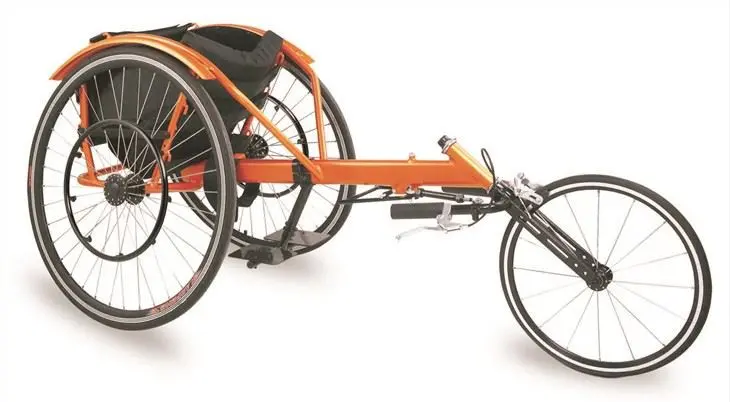
3. Racing Wheelchairs
Wheelchair racing is a premier P
aralympic sport where speed is paramount. Racing chairs are designed exclusively for velocity, with every component optimized for performance. Key characteristics include:
Ⅰ.Aerodynamic Profile: Streamlined and narrow to minimize air resistance. The
frame is often a monocoque carbon-fiber structure, offering exceptional lightness and
strength for stability at high speeds.
Ⅱ.Wheel Configuration: Front wheels are very small (2–5 inches) with solid, low-resistance tires to reduce rolling and air drag. Large rear wheels (28–30 inches) are fitted with specialized racing tires—smooth or lightly treaded—for minimal resistance and adequate grip. Rims are lightweight carbon fiber with fewer but thicker spokes to reduce weight.
Ⅲ.Seat Design: The seat adopts a reclined, ergonomic posture that aligns the athlete’s body into a streamlined shape, cutting through air efficiently. Made from lightweight carbon fiber, it provides firm support while keeping overall weight low.
Racing wheelchairs are used in track events (e.g., 100m, 400m) and marathon racing. Designs may vary based on race distance. Selection requires professional fitting by coaches and technicians to match the athlete’s physiology, ability, and event specifics.
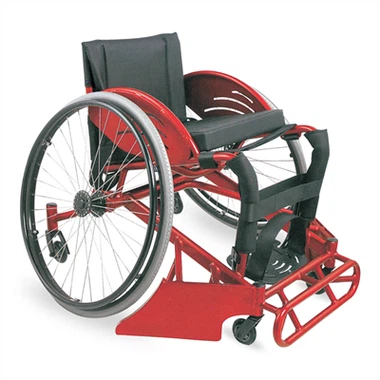 4. Wheelchair Rugby
Wheelchair rugby is a tactical, full-contact team sport often called “murderball.” Played on a basketball-sized court with rules blending rugby and ice hockey, it demands exceptional impact resistance, stability, and control. Rugby wheelchairs are engineered around collision protection and agility:
Ⅰ.Reinforced Frame: Built from high-strength chromoly steel or carbon-fiber composites, the frame features a “roll-cage” design with added bumpers and supports at the front, sides, and undercarriage to absorb high-impact collisions. A wider wheelbase and calibrated track width enhance stability during high-speed maneuvers and contact, preventing tipping.
Ⅱ.Specialized Wheels: Front wheels (12–14 inches) use solid rubber tires with reinforced rims to resist deformation during clashes. Rear wheels (24–26 inches) have high-resilience, wear-resistant rubber with deep, interlocking treads for grip during accelerations, stops, and sharp turns. Rear axles are heavy-duty alloy, paired with multi-spoke wheels for impact endurance.
Ⅲ.Protective Seat: The seat is a hard-shell structure padded with high-density foam and covered in waterproof, abrasion-resistant PU material for comfort and easy cleaning. Detachable side pads (5–8 cm thick) cushion lateral impacts. The seat is low with a fixed backrest angle (75–85°) to keep the athlete leaning forward for better power transfer and control, while lowering the center of gravity.
Ⅳ.Functional Components: A removable front bumper made of elastic polyurethane minimizes friction and disperses impact force. “Short-thick” armrests with non-slip coating help athletes brace during contact without hindering propulsion. Some high-end models feature quick-release axles and components for fast mid-game repairs.
Rugby wheelchairs are used in official matches and intense training. Designs may vary by player position (e.g., offensive chairs prioritize agility, defensive chairs emphasize protection). Selection should be personalized by technicians based on the athlete’s physique, role, and style to ensure both safety and tactical effectiveness.
In summary, selecting a sports wheelchair requires careful consideration of the sport’s specific demands and the athlete’s individual needs. Professional consultation and custom fitting are highly recommended to achieve the best match between athlete and equipment.
Post time: Dec-02-2025